Canberra's freeze-thaw winter cycles and dry summer clay shrinkage create a demanding environment for earthworks. The city sits on deeply weathered Silurian volcanics and Ordovician sediments, producing reactive clays that swell and contract dramatically with moisture change.
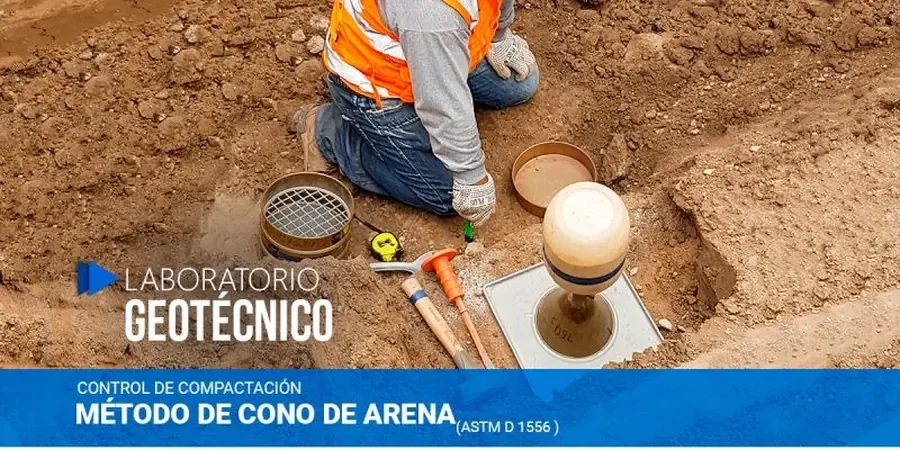
On a compacted fill job, the difference between a 95% and 98% relative compaction result can mean the difference between a stable slab and long-term cracking. Our field density test using the sand cone method (AS 1289.5.8.1) gives the site supervisor a direct measurement of in-place density, right when it matters. A test pit or CBR for road pavement design relies on this same layer-by-layer verification. We work across Belconnen, Tuggeranong, and the Molonglo Valley, where fill materials range from decomposed dacite to imported granular road base.
A sand cone test delivers a direct volume measurement using calibrated sand — no empirical correlations, just a physical check on what the roller achieved.
Method and coverage
Site conditions vary sharply between the Black Mountain sandstone slopes and the deep alluvial clays of the Jerrabomberra wetlands. On a residential pad in Gungahlin with imported fill, we check every 300 mm lift before the next layer goes down. On a service trench in Civic, the backfill is often a mix of site-won material and select granular fill, and the sand cone test is paired with a
Proctor compaction test to establish the reference maximum dry density.
The process is straightforward: excavate a small hole, weigh all removed material, run it through a moisture content check, then fill the hole with calibrated Ottawa sand from a jar of known density. The result is a wet density and dry density number that the site engineer acts on immediately. For deeper formation layers where access is tight, the team may recommend
in-situ permeability testing alongside density checks to confirm drainage characteristics of the compacted zone. The sand cone method remains the reference standard in AS 3798 because it does not require radioactive sources and works on any material finer than 37.5 mm.
Regional considerations
The sand cone apparatus itself is simple: a one-gallon plastic jar threaded onto a metal cone with a valve, a base plate, and a can of silica sand graded between 0.3 mm and 0.6 mm. The biggest risk on a Canberra site is sand loss into cracks or voids in stiff clay, which inflates the measured volume and gives a falsely low density reading.
We mitigate this by inspecting the excavation profile before pouring, and by running a moisture content determination on the same material immediately — reactive clays from the Canberra Formation can lose 2% moisture in the time it takes to walk to the trailer, skewing the dry density. When the result falls below the specified relative compaction, the roller returns. Layer thickness is reduced, moisture adjusted at the watercart, and the test is repeated until the lot passes.
Q&A
How much does a field density test cost in Canberra?
A single sand cone density test typically runs between AU$140 and AU$200 depending on travel distance and the number of tests scheduled per visit. Mobilisation to outer districts like Tharwa or Hall may add a call-out fee. We provide a fixed-price schedule for lot-based testing programs so you can budget the full compaction control scope.
When should the sand cone test be used instead of a nuclear gauge?
The sand cone method is the reference test when nuclear gauge results are in dispute, and it is mandatory on materials with variable mineralogy that affect the gauge calibration. It also avoids the regulatory requirements for radioactive source handling and storage. On a small residential site in Canberra, the sand cone is often the only method needed.
How many tests do I need for a residential slab in Canberra?
AS 3798 recommends a minimum frequency of one test per 500 m² per compacted lift, with a minimum of three tests per lot. For a typical 200 m² house pad with 300 mm of controlled fill, we perform at least one test per lift. The superintendent may increase the frequency in areas of variable material.
What relative compaction percentage is required in the ACT?
Standard practice in the ACT follows AS 3798, which specifies a minimum 95% standard Proctor relative compaction for general fill under slabs, and 98% for road sub-base. Some engineered fills in the Molonglo Valley corridor specify 100% modified Proctor density at the top 150 mm. The project specification always takes precedence, and we report results against the nominated reference.