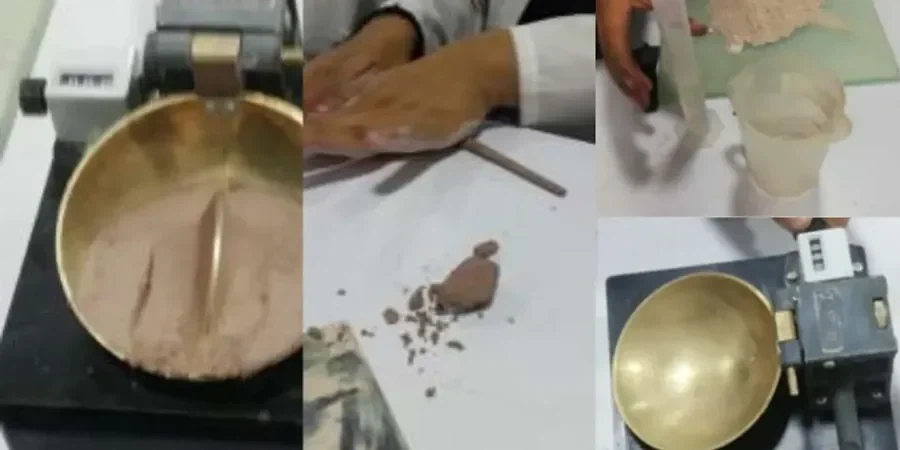
Geotechnical laboratory testing forms the backbone of informed site investigation and foundation design across the Canberra region. This category encompasses the full suite of physical, mechanical, and chemical analyses performed on soil and rock samples recovered from boreholes, test pits, and surface exposures. In the ACT, where the subsurface profile can shift from residual clayey silts to highly weathered bedrock within a few vertical metres, precise laboratory data is not optional—it is essential. The services grouped under this heading, including particle size distribution methods such as grain size analysis (sieve + hydrometer), provide engineers with the parameters needed to predict settlement, assess drainage characteristics, and select appropriate earthwork techniques. Without these controlled-environment measurements, desk-based assumptions about material behaviour carry unacceptable risk in a landscape shaped by complex paleozoic geology and variable weathering depths.
Canberra’s geological setting demands a rigorous laboratory approach. Much of the city is underlain by the Canberra Formation, comprising steeply dipping slates, sandstones, and volcanics that have weathered to form expansive, reactive clay profiles—particularly across the Belconnen and Tuggeranong districts. These residual soils can exhibit moderate to high plasticity, making the determination of Atterberg limits critical for quantifying shrink-swell potential and classifying fine-grained materials under the Unified Soil Classification System. Additionally, the presence of deeply weathered dacite and rhyolite in elevated areas like Black Mountain introduces gradational contacts between soil and rock that challenge standard logging practices. Laboratory testing bridges this gap by assigning numerical values to strength, compressibility, and mineralogy, allowing engineers to calibrate their field observations against repeatable, internationally recognised benchmarks.
All testing conducted within this category adheres to Australian Standards, primarily the AS 1289 series for soil testing methods and AS 4133 for rock testing. These norms dictate everything from specimen preparation and moisture conditioning to the specific apparatus used for consolidation and shear strength tests. In the ACT, regulatory bodies including the Environment, Planning and Sustainable Development Directorate (EPSDD) and the National Capital Authority (NCA) often mandate compliance with these standards as a condition of development approval for subdivisions, multi-storey structures, and infrastructure corridors. For Commonwealth-funded projects within the Parliamentary Zone or defence sites, additional quality assurance requirements under the National Association of Testing Authorities (NATA) framework typically apply, reinforcing the need for a laboratory partner operating under a NATA-accredited quality management system aligned with ISO/IEC 17025.
The types of projects that trigger the need for comprehensive laboratory testing are diverse. Residential slab-on-ground construction in greenfield suburbs like Whitlam or Jacka requires shrink-swell indices and soil suction profiles to inform footing design in accordance with AS 2870. Major transport initiatives, such as the light rail extensions and grade-separated interchanges on the Federal Highway, rely on repeated load triaxial testing and California Bearing Ratio (CBR) values to validate pavement subgrade performance. Commercial high-rise developments in Civic and the Molonglo Valley demand advanced shear strength and oedometer testing to manage deep excavation support and basement retention. Even smaller-scale works—retaining walls, stormwater infiltration trenches, and utility trench backfill—benefit from permeability tests and compaction control curves that originate in the laboratory. Each of these scenarios shares a common thread: the laboratory converts site-specific soil and rock samples into defensible geotechnical parameters that underpin safe, economical design.
A standard laboratory scope for Canberra projects generally includes moisture content, Atterberg limits, particle size distribution by sieve and hydrometer, soil classification to AS 1726, and point load strength index for rock. Depending on the site conditions, advanced testing such as direct shear, triaxial compression, oedometer consolidation, shrink-swell index, and Emerson dispersion may be added to address slope stability, settlement, or reactive soil concerns.
Australian Standards, principally the AS 1289 suite for soil and AS 4133 for rock, prescribe the equipment, procedures, and reporting formats for all routine and advanced tests. In the ACT, compliance with these standards is typically required by planning authorities and is enforced through NATA accreditation audits, ensuring that results are traceable, repeatable, and legally defensible for development applications and construction certification.
Field logging provides qualitative descriptions of colour, consistency, and fabric, but it cannot quantify engineering properties such as shear strength, compressibility, or permeability. Laboratory testing assigns numerical values to these parameters under controlled conditions, removing subjective bias. This is particularly important in Canberra’s weathered profiles, where visual cues alone often fail to distinguish between moderately weathered rock and highly plastic residual clay.
Turnaround time depends on the test suite and sample condition. Routine index testing—moisture content, sieve analysis, and Atterberg limits—can often be reported within three to five business days. Consolidation and triaxial tests require longer curing and shearing phases, typically extending to two or three weeks. Urgent programs can be expedited through prior arrangement, with partial results released progressively to meet critical design milestones.