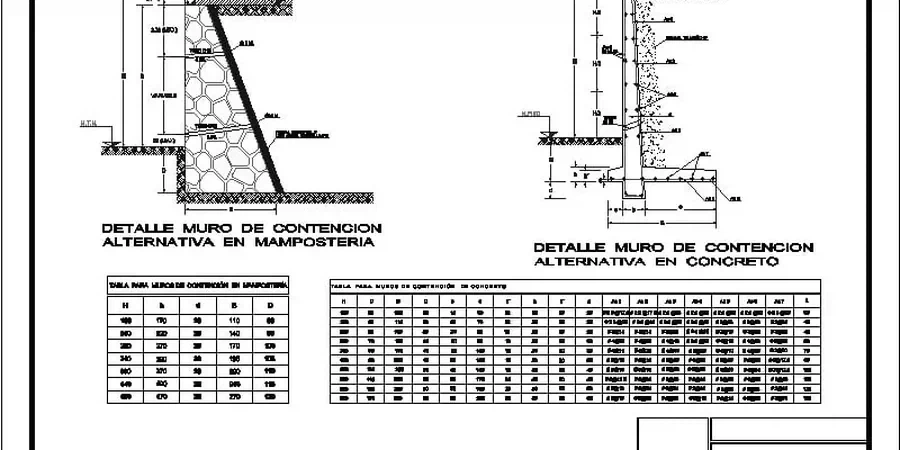
AS 4678:2002 is not a suggestion in the ACT; it is the non-negotiable benchmark for earth retaining structures, and its application across Canberra's terrain requires more than a generic calculation. The city sits on a geological patchwork of deeply weathered Silurian volcanics, the famous Canberra Formation shales, and extensive Quaternary alluvium along the Molonglo River floodplain. Each material reacts differently to seasonal moisture fluctuations that typify the region, with reactive clay zones imposing significant lateral pressures that a textbook design will miss. A slope stability analysis often becomes the precursor to wall design when dealing with the cut-and-fill platforms so common in suburbs like Denman Prospect or Whitlam. We find that integrating the broader geotechnical context from the outset transforms a retaining wall from a potential long-term liability into a solid piece of civil infrastructure that manages both structural and hydrostatic loads effectively.
Effective retaining wall design in the ACT hinges on managing transient pore pressures in reactive soils, not just resisting static earth forces.
Regional considerations
A 22-tonne excavator equipped with a rock breaker attachment stands idle next to a partially excavated cut in the suburb of O'Malley, the operator waiting on a revised design because the excavation revealed a dyke of extremely hard, unweathered dacite. This is the physical reality of constructing retaining walls in Canberra: the geological variability can render a standard auger-based investigation insufficient, and a rigid adherence to a single design profile can stall a project for weeks. The primary risk in the ACT is not just a wall sliding or overturning, but the insidious failure of the global slope mass triggered by an underestimation of the bedrock profile. When a gravity or cantilever wall is founded on what was assumed to be competent rock but is actually a boulder within a softer matrix, differential settlement cracks propagate through the facing panels. For anchored walls in these conditions, we often specify anchor bond lengths that extend well into the proven fresh rock beyond the zone of relaxation, using load-testing protocols to verify the ultimate geotechnical capacity against the aggressive serviceability requirements of the AS 4678 standard.
Q&A
What is the typical cost for retaining wall design engineering in Canberra?
For a residential or small commercial retaining wall in the ACT, the design engineering fees typically range from AU$1,770 to AU$7,370 depending on the wall complexity, height, and the required number of site visits. Larger infrastructure walls or those requiring complex anchored systems will involve a scope-specific proposal beyond this indicative range.
How does the expansive Canberra Formation clay affect retaining wall design?
The claystone within the Canberra Formation is highly reactive, meaning it undergoes significant volume changes with variations in moisture content. This imposes swell pressures against the back of the wall that can far exceed the theoretical active earth pressure. Our designs mitigate this by specifying a free-draining structural backfill zone, installing subsoil drainage that discharges to a legal point, and checking the wall's structural capacity against a specified swell pressure envelope rather than just a drained friction angle.
Do all retaining walls over one meter in height require a building approval in the ACT?
Under the Building Act 2004, retaining walls over 1.0 meter in height generally require a development application and building approval in the ACT, and the design must be certified by a chartered structural or geotechnical engineer. Walls that support a surcharge, such as a driveway or a building, may require engineering even if they are less than one meter high, particularly in areas zoned for high seismic hazard under AS 1170.4.
What type of backfill material is specified for reinforced soil walls in Canberra?
The Transport Canberra and City Services standard specification requires a free-draining granular material with a minimum effective friction angle of 34 degrees and less than 5% fines passing the 75-micron sieve. For mechanically stabilized earth walls, the electrochemical properties of the fill are also tested against the reinforcement durability requirements of AS 4678 to ensure the design life of the metallic or polymeric strips is not compromised by the ACT's generally acidic soil environment.
How is global stability verified for a wall founded on a sloping site?
When a retaining wall is constructed on or near a slope, the design must verify that a deep-seated failure surface passing beneath the wall will not occur. We use Spencer's limit equilibrium method to search for the critical non-circular slip surface, incorporating the wall's mass and any tie-back anchor forces as external loads. The minimum acceptable factor of safety for this global stability check is 1.5 under long-term drained conditions, compliant with the AS 4678 requirements for the ultimate limit state.