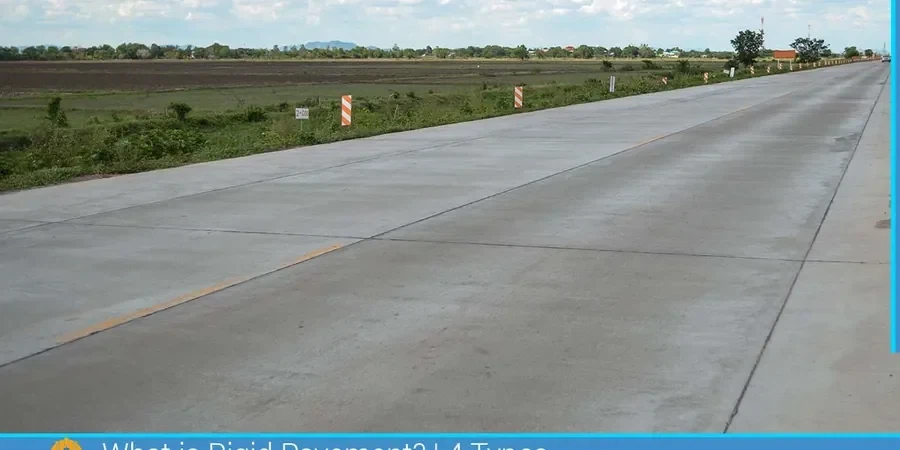
We recently reviewed a heavy-duty parking lot in Fyshwick where the concrete slabs had curled so severely at the edges that forklifts were scraping their undercarriages on every pass. The owner had assumed any concrete thickness would suffice, but Canberra's diurnal temperature range — often exceeding 15 degrees Celsius between dawn and midday — generates thermal gradients that demand a fundamentally different approach to rigid pavement design. Without accounting for the interaction between the stiff slab, the reactive subgrade, and the moisture-depleted topsoil that characterizes much of the Molonglo Valley, the pavement becomes a liability within two winters. Our team addresses this by integrating geotechnical investigation data — typically from test pits to assess near-surface conditions — directly into the structural model, ensuring the slab works with the ground rather than fighting it.
A rigid pavement in Canberra experiences more fatigue cycles from daily thermal curling than from a week's worth of truck traffic.
Regional considerations
Austroads Guide to Pavement Technology Part 2 and AS 3727 provide the national framework, but Canberra's specific climate loading amplifies the risk of joint deterioration and mid-panel cracking in ways the generic Austroads models can underestimate. The combination of cold nights — often dropping below minus 5 degrees Celsius in July — and dry, compacted clay subgrades creates conditions where the slab edges lift and lose contact with the base, concentrating heavy vehicle loads on a reduced footprint. Once pumping begins at a transverse joint, the rate of deterioration accelerates exponentially. The local experience in the Majura Valley has shown that even a 250 mm industrial slab will fail within five years if dowel alignment is compromised during construction or if the subbase material retains too much moisture during freeze-thaw cycles. Our approach prioritizes joint design, base permeability, and subgrade stabilization as inseparable components of a durable rigid pavement design.
Q&A
What does rigid pavement design typically cost for a Canberra industrial project?
For a standard industrial pavement or warehouse floor in Canberra, the design fee generally falls between AU$2,750 and AU$10,050 depending on the slab area, traffic loading classification, and the extent of geotechnical investigation required. A large distribution centre in Hume with complex joint detailing and heavy forklift loads will sit at the upper end, while a smaller workshop slab on confirmed ground conditions is more straightforward.
Why does Canberra's climate demand a different approach to concrete pavement design?
Canberra's inland location produces significant diurnal temperature ranges, often exceeding 15 degrees, which induces strong thermal gradients through the slab thickness. The cold winter nights cause the top of the slab to contract relative to the warmer base, lifting the corners and edges. This curling effect, combined with the region's reactive clay subgrades that shrink and swell with seasonal moisture changes, creates a fatigue loading regime that is more severe than the traffic alone would suggest. Our designs explicitly model this temperature differential per Austroads guidelines.
How long does the design process take from investigation to final drawings?
A typical timeline for a rigid pavement design in the ACT is three to four weeks from the completion of the geotechnical field investigation. The first week focuses on laboratory testing of subgrade samples and concrete mix verification, followed by one to two weeks of structural modeling and joint layout optimization. The final week produces the stamped design drawings and technical specification ready for tender. Projects requiring NATA-accredited flexural strength testing of trial concrete batches may add a few days to the schedule.