← Home · Laboratory

Laboratory CBR Testing in Canberra: Pavement Strength for the Bush Capital

Together, we solve the challenges of tomorrow.

EXPLORE →

Canberra's freeze-thaw winters and dry, cracking summers don't forgive a weak subgrade. Lake George clays and weathered silts across Belconnen and Tuggeranong shift with moisture in ways that destroy pavement sections within a single cycle. We run the laboratory CBR test not as a formality, but as a direct measurement of how the material will behave under saturated, compacted conditions. For road designers and earthworks supervisors auditing fill performance, combining soaked CBR values with a field Proctor curve ensures the lab number translates to the compactor drum, while a grain-size distribution clarifies whether the fines are plastic enough to cause trouble later.

A soaked CBR value below 3% on a Canberra clay subgrade isn't a number to ignore; it's a direct instruction to remove and replace before the first asphalt lift.

Method and coverage

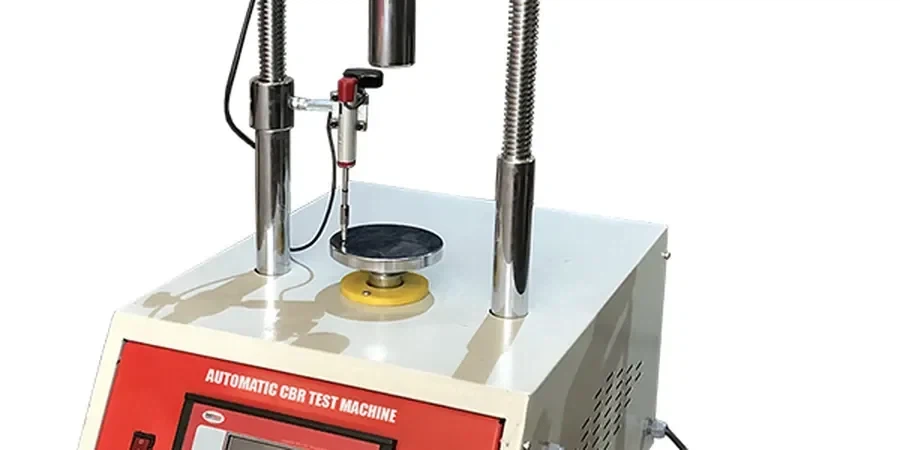
The test rig itself is straightforward: a cylindrical mould compacted to Modified or Standard effort, soaked for four days in a water bath to simulate Canberra's perched water tables, then penetrated with a 49.6 mm piston at 1 mm/min. The load-penetration curve tells the real story. A sharp break at 2.5 mm penetration means a brittle crushed rock; a soft, rounded curve with low CBR points to moisture-sensitive fines that will rut under traffic. Our NATA-accredited lab runs the full AS 1289.6.1 sequence, and we cross-reference results against in-situ density checks when correlating lab CBR with the achieved field compaction on projects like the duplication of major arterial corridors through the Molonglo Valley.
Laboratory CBR Testing in Canberra: Pavement Strength for the Bush Capital
Technical reference image — Canberra

Regional considerations

AS 1289.6.1 mandates a four-day soak, and in Canberra that is non-negotiable. Subgrades that look solid in summer can turn to slurry once the water table rises in spring or after a wet winter. We have seen CBR values drop from 15% to below 3% after soaking in material sourced from lower Tuggeranong. The risk is not just pavement failure; it is contract disputes over whether the material met specification. A soaked laboratory CBR test provides the legal baseline that protects both the designer and the contractor.

Need a geotechnical assessment?

Reply within 24h.

Email: contact@geotechnicalengineering1.co

Technical parameters

ParameterTypical value
StandardAS 1289.6.1.1 (soaked CBR)
Compactive effortStandard or Modified Proctor
Soaking period4 days submerged
Surcharge mass4.5 kg annular weights
Penetration rate1.0 mm/min
Mould dimensions152 mm diameter x 178 mm height
Reported valuesCBR at 2.5 mm and 5.0 mm

Complementary services

01

Soaked CBR (4-day)

The standard test for subgrade and select fill evaluation under AS 1289.6.1.1, simulating saturated conditions.

02

Unsoaked CBR

Used for free-draining granular materials where saturation is not the governing condition, often specified for basecourse QA.

03

CBR with Swell Measurement

Records percent swell during the soaking period, critical for identifying expansive clays in Canberra's sedimentary formations.

Standards that apply

AS 1289.6.1.1, AS 3798, TfNSW R44

Q&A

How much does a laboratory CBR test cost in Canberra?

A standard soaked CBR test typically ranges from AU$200 to AU$300 per point, depending on the compactive effort and whether swell measurement is included. Multi-point programmes or urgent turnaround may adjust the rate.

What is the difference between field CBR and laboratory CBR?

A laboratory CBR test uses carefully controlled compaction and a four-day soak to give a repeatable, conservative strength value. Field CBR testing, such as a DCP, assesses in-situ strength at natural moisture content and density. The lab value is the design benchmark; the field value confirms construction quality.

Which Australian standard governs the laboratory CBR test?

AS 1289.6.1.1 covers the standard method for determining the soaked CBR of a remoulded specimen. We also reference AS 3798 for earthworks control and relevant state road authority specifications.

How long does it take to get CBR results?

The standard soaking period is four days, plus sample preparation and testing. You should allow five to seven working days for a certified NATA report. If unsoaked CBR is acceptable for your material, we can report sooner.
Location and service area

We serve projects across Canberra and its metropolitan area.

View larger map