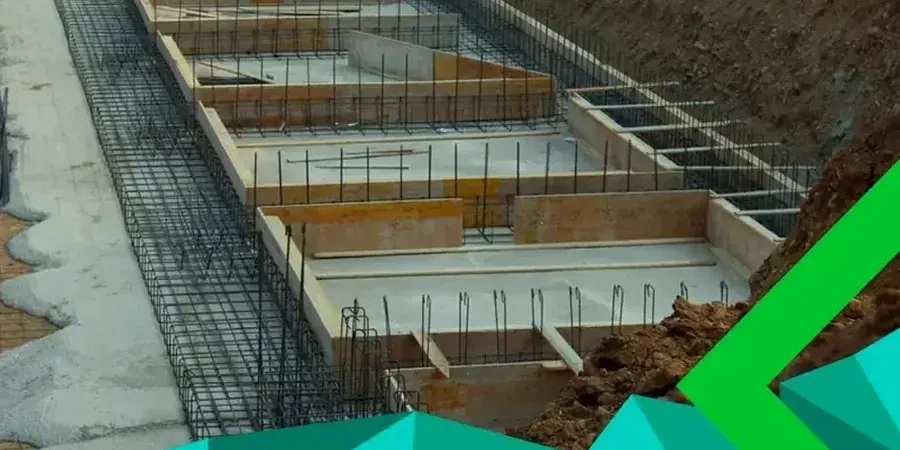
Foundations are the critical interface between any structure and the ground that supports it, and in Canberra, their importance cannot be overstated. The category encompasses the full spectrum of below-ground engineering required to safely transfer structural loads into the earth, including site investigation, geotechnical analysis, footing selection, and construction oversight. Canberra's built environment ranges from single-storey residential dwellings in suburbs like Belconnen to multi-level commercial towers in Civic, each demanding a tailored foundation solution. A poorly conceived foundation here risks not just structural distress but costly remedial works, making early engagement with qualified geotechnical professionals essential for any project.
Canberra's geology presents a distinctive set of challenges that directly influence foundation design. Much of the city is underlain by the Canberra Formation, comprising deeply weathered siltstones, shales, and sandstones that can exhibit variable strength and significant shrink-swell behaviour. Expansive clay soils are widespread, particularly in areas like Gungahlin and Tuggeranong, where reactive ground movements can wreak havoc on inadequately designed footings. Additionally, isolated pockets of alluvial sands and gravels along the Molonglo River corridor pose liquefaction risks under seismic loading, while gently sloping terrain in established suburbs can introduce slope stability concerns. Understanding this complex geological mosaic is the starting point for any reliable foundation strategy.
All foundation works in Canberra must comply with the National Construction Code (NCC) and the referenced Australian Standards, most notably AS 2870 for residential slabs and footings and AS 2159 for piling design and installation. Local interpretation of these codes is shaped by the ACT Government's Environment, Planning and Sustainable Development Directorate, which enforces site-specific geotechnical reporting as part of the development approval process. For larger or more sensitive structures, AS 1170.4 seismic provisions apply, requiring designers to account for the region's moderate seismicity. Adherence to these standards is not optional; it is a legal obligation that underpins structural safety and insurability across the Territory.
The types of projects that demand rigorous foundation engineering in Canberra are remarkably diverse. A standard residential build on a reactive clay site will typically require an engineered slab-on-ground designed in accordance with AS 2870, while a multi-storey commercial development may necessitate a deep foundation system such as pile foundation design to bypass weak near-surface soils and reach competent bedrock. Infrastructure projects like bridges, retaining walls, and stormwater detention basins introduce additional complexities, often requiring piled or cantilevered solutions to manage lateral earth pressures. Even modest renovations or extensions can trigger foundation upgrades if existing footings are found to be undersized for current code requirements. Each scenario demands a bespoke approach grounded in thorough geotechnical investigation.
The predominant issue is reactive clay movement caused by seasonal moisture changes, leading to slab heave, cracking, and sticking doors or windows. Other common problems include differential settlement where fill material was poorly compacted, and erosion or scour on sloping blocks. These defects often stem from foundations designed without adequate site-specific soil testing or constructed without proper drainage controls.
For any building requiring development approval in the ACT, a geotechnical investigation is mandatory. This report classifies the site according to AS 2870, identifies soil reactivity, bearing capacity, and any special conditions like fill or tree influences. Building on assumptions without this data exposes you to significant risk of foundation failure and non-compliance with the NCC.
The decision is driven by the geotechnical report's findings on bearing capacity and depth to competent stratum. If near-surface soils are too weak, highly reactive, or contain uncontrolled fill, a pile foundation design may be specified to transfer loads to deeper, more stable ground. Structural loads, site access, and proximity to neighbouring properties also influence the choice between bored piers, driven piles, or screw piles.
Foundation design must comply with the National Construction Code and Australian Standards AS 2870 (residential) and AS 2159 (piling). The ACT's Planning Act 2023 and associated regulations enforce these standards through the building approval process. Additionally, the ACT Government's Design Acceptance submissions for larger projects require detailed foundation engineering reports demonstrating compliance with all relevant codes and local practice notes.