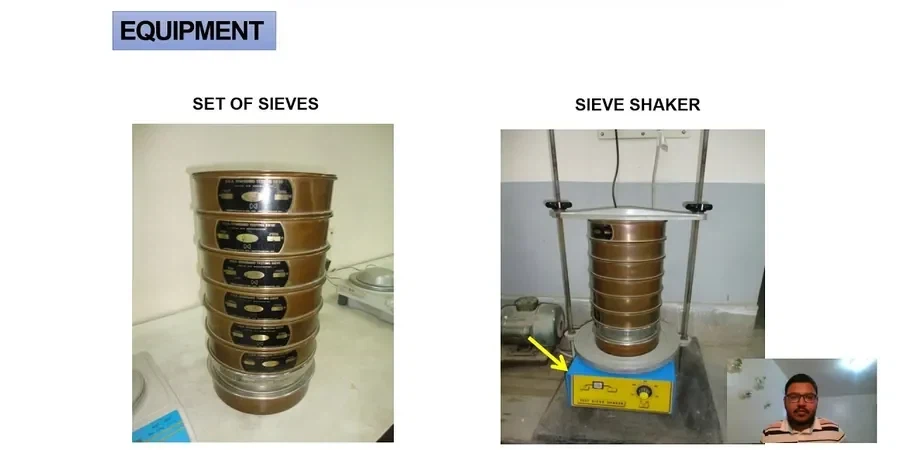
Canberra's geology catches people out. You hit a clean quartz sand at one site in Belconnen, then move 2 km south and the bore returns stiff silty clay derived from weathered Canberra Formation volcanics. Grain size analysis tells you what you're really dealing with. We run the full hydrometer + sieve suite because a sieve-only curve misses the fines that control permeability and shrink-swell behaviour. In our experience, the gap between a quick field classification and the actual PSD often explains why a footing design felt too conservative—or why a drainage layer clogged prematurely. Combining a test pit log with a complete particle size distribution gives you a defensible site model before you commit to earthworks volumes.
A sieve-only curve is half the answer—Canberra's silty residual profiles demand the hydrometer data to get drainage and consolidation parameters right.
Q&A
What does a combined sieve and hydrometer test cost in Canberra?
A combined sieve-plus-hydrometer analysis typically runs between AU$180 and AU$280 per sample, depending on the maximum particle size and whether the sample needs drying, splitting, or special dispersant preparation. We quote firm once we know the material type and the number of samples.
How long does the hydrometer part of the test take?
The sedimentation phase requires readings at specific intervals over a minimum of 24 hours, plus an overnight pre-soak with dispersant. Most reports are ready within two to three working days from sample receipt.
Can you run grain size analysis on samples from our own drilling crew?
Yes, as long as the samples are sealed in airtight bags and labelled with depth, borehole ID, and date. We prefer disturbed bulk samples of at least 500 g for fine soils and 5 kg where gravels are present.
Why does Canberra's geology make the hydrometer step so important?
Much of the urban area sits on deeply weathered Ordovician and Silurian rocks that produce a silty, micaceous residual soil. The fines content directly affects drainage, compaction behaviour, and reactivity, so skipping the hydrometer often leads to an overestimate of permeability and an underestimate of volume change potential.